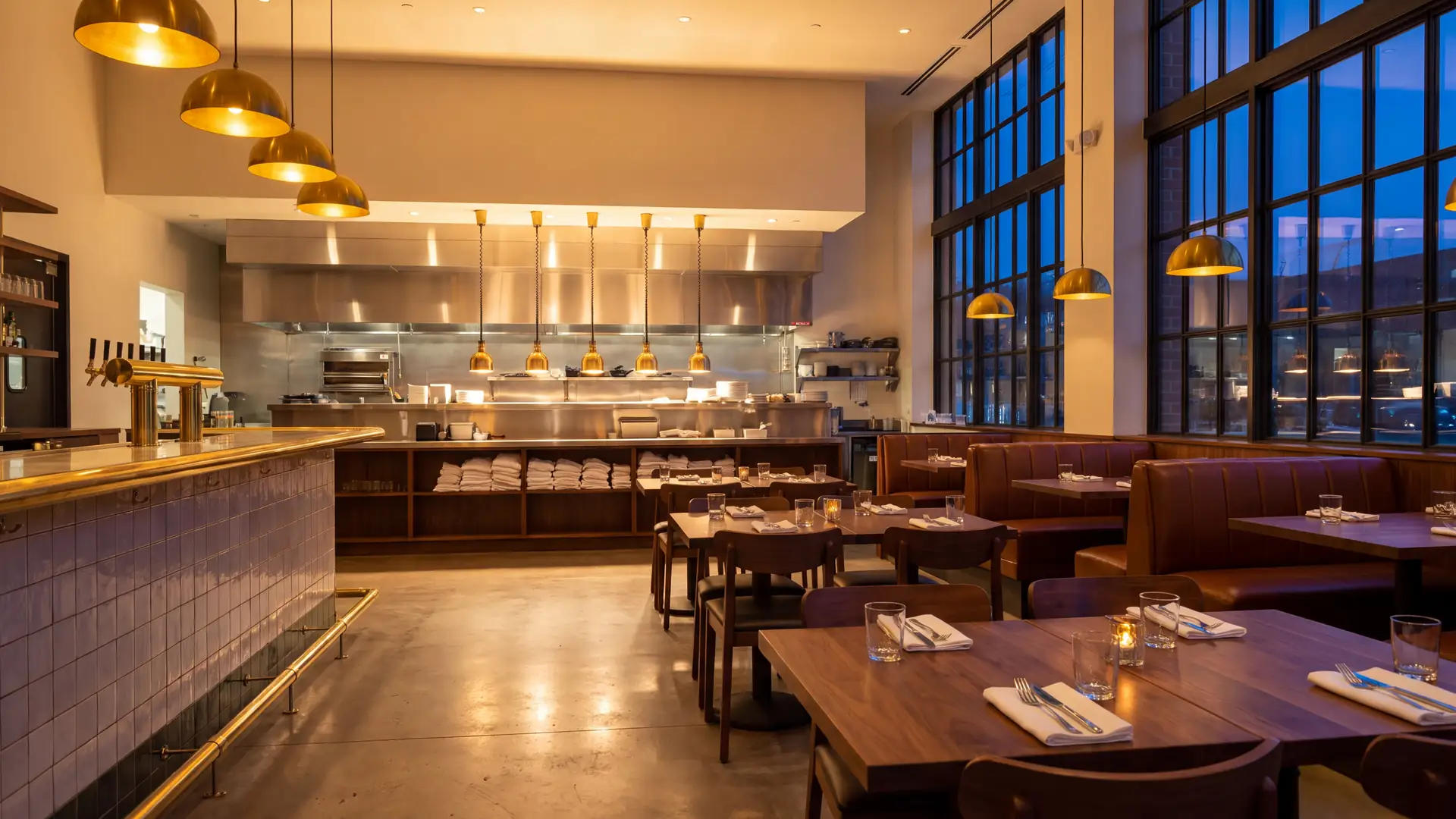
Restaurant construction
and remodeling in
San Diego.
Kaminskiy Commercial Construction builds and remodels restaurants across San Diego County: kitchens, hoods, grease interceptors, bars and dining rooms. We draw the plans, take them through the building department and the County health department, and build the space on one contract, so the opening date runs on one schedule.
- What we buildRestaurants, cafes, bars, commercial kitchens
- WhereSan Diego County
- LicenseCSLB B General Building #922807
- How we workDesign, permit and construction, one contract
Restaurant construction
A restaurant is the hardest small space to build: a factory with a dining room attached.
More plumbing, gas, power and exhaust goes into a restaurant kitchen than into an office ten times its size, and more agencies have to sign off before it opens. The dining room is the easy part.
In a leased space the build-out is a tenant improvement, and the lease decides who pays for what.
Two halves
Back of house, front of house.
They are built by the same crew and follow different rules.
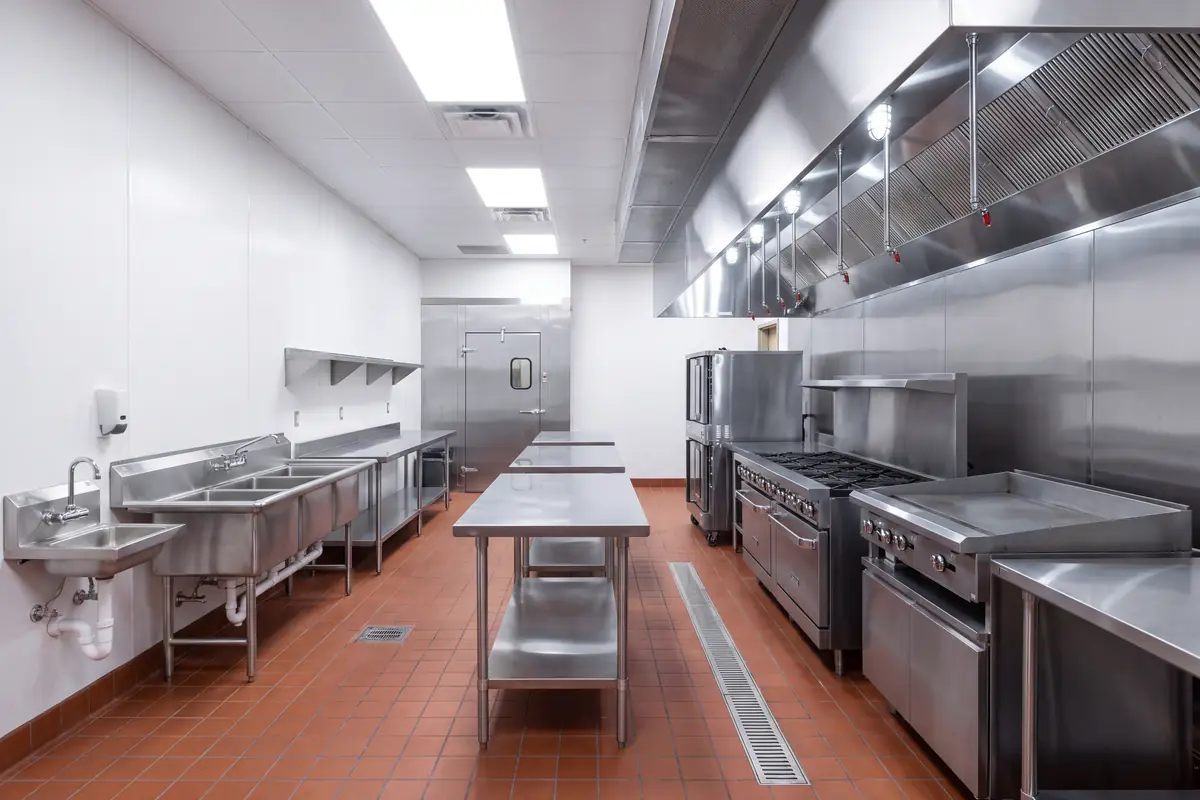
Back of house
The cooking line under a hood with its own fire suppression, the grease interceptor, floor sinks and drains, walk-in coolers, washable walls and ceilings, and the gas and power to run it all.
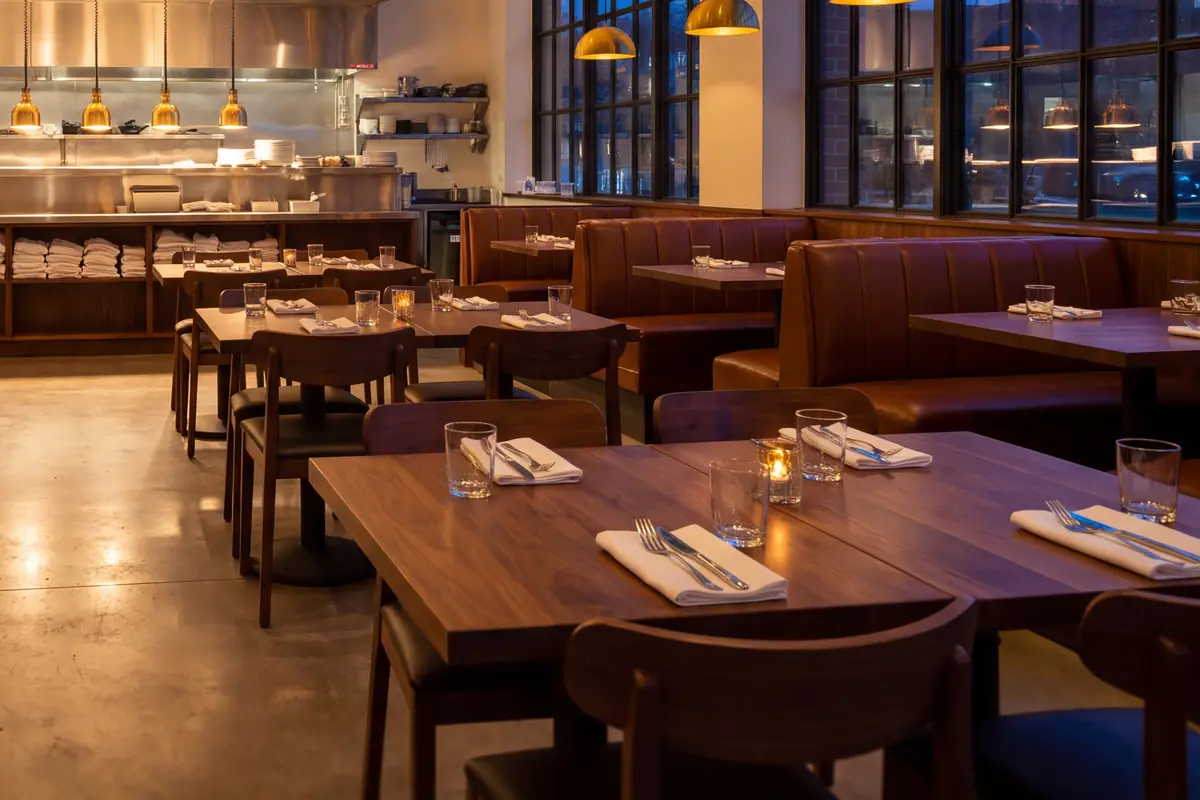
Front of house
The bar, the dining room, the restrooms and the entry. Lighting, sound and finishes that hold up to service every night.
Before opening
Five approvals before the first plate.
Each one runs on its own clock. Starting them in the right order is most of what keeps a restaurant's opening date.
- 01
The building permit
Plans go to the building department of the city that has the address. Once the room is designed for 50 or more people, the code treats it as an assembly space, with stricter rules for exits and often for sprinklers.
- 02
The health department
The County's environmental health department reviews the kitchen plans before construction and inspects before opening: equipment, sinks, finishes, storage and restrooms.
- 03
The hood and its fire suppression
Cooking that produces grease needs a hood with its own fire suppression system, ducted to the outside. It is permitted and inspected on its own.
- 04
The grease interceptor
The local wastewater agency sets its size and where it goes. In an existing building, where it can go often decides whether the space works as a restaurant at all.
- 05
The alcohol license
The state license to serve alcohol is the owner's to obtain, and it runs on its own schedule. It is worth starting when the lease is signed.
Budget
What makes a space cost more or less to open as a restaurant.
Two spaces at the same rent can be far apart in what they cost to open. These are the differences.
What moves the budget of any build-out is on the tenant improvement page. What drives the cost.
What it was before
A former restaurant may already have the hood, the interceptor, the gas service and the restrooms. A former shop has none of them.
The way out for the exhaust
The hood duct has to reach the roof. On the ground floor of a tall building that route can be the largest single cost.
Gas and power
Whether the existing services are big enough for the cooking line, the refrigeration and the air conditioning.
Restrooms
How many the seating requires, and whether the existing ones are accessible.
The patio
Outdoor seating adds its own approvals, and sometimes work in the public sidewalk.
Equipment
Hoods, walk-in coolers and custom stainless take time to arrive. They are ordered while the permit is in review.
Questions
Restaurant construction questions.
How is a restaurant build-out different from other tenant improvements?
A restaurant needs far more plumbing, gas, power and exhaust than an office or a store, and more agencies have to approve it. Besides the building permit, the kitchen goes through the County health department, the hood and its fire suppression are permitted on their own, and the wastewater agency sizes the grease interceptor.
Is a second-generation restaurant space worth it?
Usually. A space that was a restaurant before often has the hood, the grease interceptor, the gas service and the restrooms in place, and those are the most expensive parts to add. They still have to be checked. An old hood or an undersized interceptor may not pass for a new kitchen.
Who deals with the health department?
The kitchen plans go through the County's plan check along with the building plans, and its inspector visits before opening. We prepare for both and schedule the inspections. The health permit itself is issued to the operator.
When should we bring in a contractor?
Before the lease is signed if you can. Whether a hood duct can reach the roof, where a grease interceptor can go and whether the gas and power are big enough decide what a space will cost to open. A walk-through answers most of that in an hour.
Start here
Request a site walk in San Diego County.
Tell us about the space. We will call to set a time to walk it with you.
Office12396 World Trade Dr, Suite 106A
San Diego, CA 92128
Phone(858) 371-3839
HoursMonday to Friday, 8:00 AM to 4:30 PM